DESCRIPTION

As high-fidelity sensors continue to become smaller and more compact, drones are now capable of carrying more payload options than ever before. With all these various models, picking the right one for each unique industrial use can feel overwhelming. The best way to begin is to identify your specific needs by first determining the result that you want. What are you hoping to achieve? Once you have established your goals, selecting the best-suited sensor will come easily. We are cognizant of the fact that better aerial information is highly dependent on the quality of data coming into the pipeline. For this reason, we offer a wide range of sensors and comprehensive data analysis tools that are unparalleled in today’s UAV market. Below is a brief overview of each sensor available, its industry applications and use cases.

TYPES OF SENSORS

Active Sensors

Active Sensors

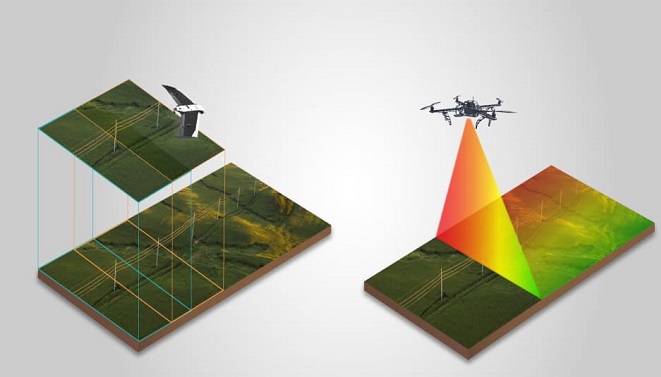
Active sensors create their own electromagnetic energy that is transmitted from the towards the terrain, interacts with the terrain producing a backscatter pf energy and is recorded the remote sensor's receiver. Examples of other active sensor-based technologies include: LiDAR, radar, GPS, x-ray,and sonar
Passive-Sensors

Passive Sensors

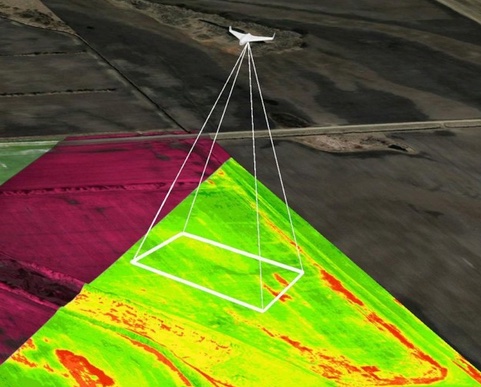
Remote sensing systems which measure energy that is naturally available are called passive sensors. Passive sensors can only be used to detect energy when the naturally occurring energy is available. Passive sensors include visual, thermal infrared (TIR), multispectral, and hyperspectral sensors.